PDF p. 198 · 4-14
- 1.Disconnect the wire from the terminal M.
- 2.Make a connection as described below using as heavy a wire as possible (preferably equivalent to the wire used for the vehicle).
- 3.Connect the battery as shown. If the starter pinion pops out, it is working properly. To avoid damaging the starter, do not leave the battery connected for more than 10 seconds.
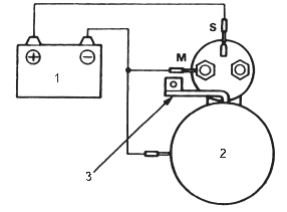
- 1. 12 V BATTERY
- 2. BODY (GROUND)
- 3. Disconnect the wire.
- 4.Disconnect the battery from the M terminal. if the pinion does not retract, the hold-in coil is working properly. To avoid damaging the starter, do not leave the battery connected for more than 10 seconds.
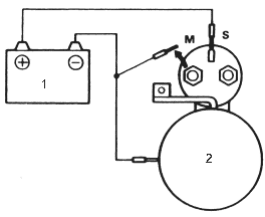
- 1. 12 V BATTERY
- 2. BODY (GROUND)
- 5.Disconnect the battery also from the body. If the pinion retracts immediately, it is working properly. To avoid damaging the starter, do not leave the battery connected for move than 10 second.
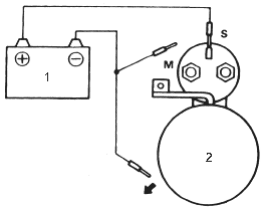
- 1. 12 V BATTERY
- 2. BODY GROUND
- 6.Clamp the starter firmly in a vice.
- 7.Connect the starter to the battery as described in the diagram below, and confirm that the motor starts and keeps rotating.
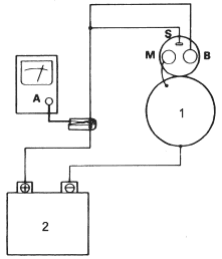
- 1. STARTER
- 2. 12 V BATTERY
- 8.If the electric current and motor speed meet the specifications when the battery voltage is at 11.5 V, the starter is working properly.
Specifications:
| Electric current | Motor speed | |
| 80 A or less | 2,600 rpm (min-1) or | |
more