PDF p. 811 · 17-16
When using a new belt, first adjust the deflection or tensions to the values for the new belt, then readjust the deflection or tension to the values for the used belt after running engine for five minutes.
Inspection
Note these items during inspection:
- If there are cracks or any damage evident on the belt, replace it with a new one.
- Follow the manufacturer’s instructions for the tension gauge.
- 1.Attach the belt tension gauge to the belt and measure the tension of the belt.
- 2.Remove the belt tension gauge carefully to avoid hitting the gauge reset lever.
Tension:
Used Belt: 340-490 N (35-50 kgf, 80-110/lbf)
New Belt: 640-785 N (65-80 kgf, 140-180/lbf)
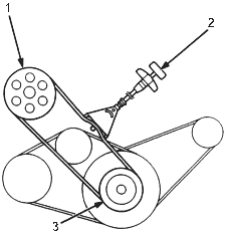
- 1. POWER STEERING PULLEY
- 2. BELT TENSION GAUGE 07JGG-0010100
- 3. CRANKSHAFT PULLEY
Measurement without Belt Tension Gauge:
Apply a force of 98 N (10 kgf, 22 lbf) and measure the deflection between the power steering pump and the crankshaft pulleys.
Deflection:
Used Belt: 10.5-14.0 mm (0.41-0.55 in.)
New Belt: 7.5-10.0 mm (0.30-1.39 in.)
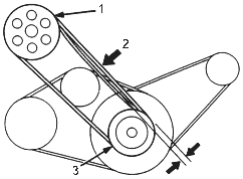
- 1. POWER STEERING PULLEY
- 2. Measure here.
- 3. CRANKSHAFT PULLEY
Adjustment
- 1.Loosen the power steering pump mounting bolt and pump lock bolt.
- 2.Adjust the belt tension by moving the power steering pump with a 1/2” drive breaker bar to obtain the proper belt tension, then retighten the mounting bolt and lock bolt.
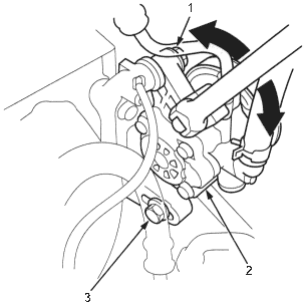
- 1. PUMP MOUNTING BOLT, 24 Nm (2.4 kgf/m, 17 lbf/ft)
- 2. POWER STEERING PUMP
- 3. PUMP LOCK BOLT, 24 Nm (2.4 kgf/m, 17 lbf/ft)
- 3.Start the engine and turn the steering wheel from lock-to-lock several times, then stop the engine and recheck the deflection of the belt.