PDF p. 223 · 4-39
NOTE: When using a new belt, first adjust the deflection or tension to the values for the new belt, then readjust the deflection or tension to the values for the used belt after running the engine for five minutes.
Deflection method:
Apply a force of 98 Nm (10 kgf, 22 lbf), and measure the deflection between the alternator and crankshaft pulley.
Deflection:
Used Belt: 8.0 - 10.5 mm (0.31 - 0.41 in)
New Belt: 6.0 - 8.5 mm (0.24 - 0.41 in)
NOTE: If the belt is worn or damaged, replace it.
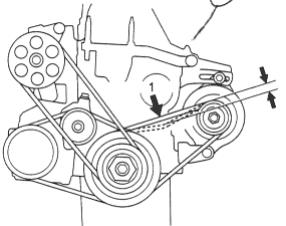
- 1. Measure here
Belt tension gauge method:
Attach the belt tension gauge to the belt and measure the tension. Follow the gauge manufacturer’s instructions.
Tension:
Used Belt: 340 - 490 N (35 - 50 kgf, 77 - 110 lbf) New Belt: 540 - 740 N (55 - 75 kgf, 120 - 170 lbf)
NOTE: If the belt is worn or damaged, replace it.
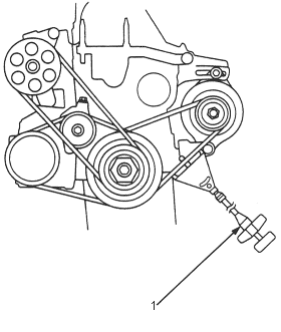
- 1. BELT TENSION GAUGE, 07JGG-0010101
PDF p. 224 · 4-40
If adjustment is necessary:
- 1.Loosen the mounting nut and the locknut.
- 2.Move the alternator to obtain the proper belt tension, then retighten the nuts.
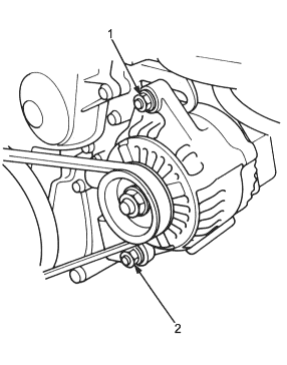
- 1. LOCKNUT, 8 x 1.25 mm, 24 Nm (2.4 kgf/m, 17 lbf/ft)
- 2. MOUNTING NUT, 10 x 1.25 mm, 44 Nm (4.5 kgf/m, 33 lbf/ft)
- 3.
Recheck the deflection or tension of the belt.
NOTE: For the power steering pump belt and A/C compressor belt adjustments, refer to sections 17 and 22.